
Monoclonal antibodies explained: effective and targeted treatments for veterinary medicine
This audio recording was enabled by AI
We asked our experts to answer some common questions we’ve received from veterinarians about monoclonal antibodies, also known as mAbs. Read more below and download the pdf to share with your practice.

Key Points
- Monoclonal antibodies (mAbs) are intended to provide highly targeted treatment for complex diseases. They are engineered to be species-specific, which may reduce the potential for immunogenicity.
- mAbs often have extended dosing intervals which may simplify treatment regimens.
- All currently approved mAbs available to veterinarians have a demonstrated safety profile, supported by rigorous development and ongoing monitoring.
- Looking to the future, mAbs have broad and expanding clinical potential. Ongoing innovation may open new applications in veterinary medicine.
Q: What is a monoclonal antibody?
A: A monoclonal antibody (mAb) is an engineered laboratory-produced molecule designed to work like natural antibodies. It is designed to recognize and bind with high specificity to a particular antigen, such as a protein on the surface of a pathogen or a molecule involved in disease processes.
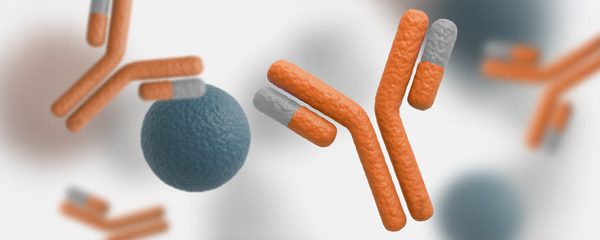
A mAb is a protein belonging to the immunoglobulin family. Structurally, each antibody is composed of two heavy chains and two light chains, linked together to form a characteristic Y-shaped molecule. The molecular weight of a complete antibody is approximately 150 kilodaltons (kDa).
Antibodies are organized into different functional regions:
- The Fc fragment, which is responsible for binding to immune cell receptors and triggering effector functions.
- The Fab fragments, which contain the antigen-binding sites. Within this part, the paratope specifically binds to the antigen, and the complementarity-determining regions (CDRs) provide the unique specificity of the antibody toward its target.
The term monoclonal indicates that these antibodies are produced by a single clone of activated B lymphocytes, also known as plasma cells. As a result, all monoclonal antibodies are identical in structure and recognize the same unique epitope on an antigen.
In human medicine, mAbs have revolutionized treatment for diseases like cancer, autoimmune disorders, and infectious diseases by providing targeted therapies. In veterinary medicine, this precision translates into therapies that aim to effectively address complex diseases.
Q: What makes a monoclonal antibody treatment different from traditional, small molecule treatments?
A: Monoclonal antibody treatments differ from traditional, small molecule therapies primarily in their specificity and mechanism of action.
Traditional, small molecule veterinary treatments often rely on broad-spectrum approaches such as antibiotics, corticosteroids, or non-steroidal anti-inflammatory drugs. A targeted approach through mAbs aims to reduce off-target effects.
Additionally, due to their protein structure and recycling mechanisms, mAbs can allow treatments to be administered less frequently—sometimes monthly or even less often—which can improve convenience and compliance.
Q: How do monoclonal antibodies work?
A: Monoclonal antibodies work by specifically binding to their target, thereby neutralizing it or modulating its activity.
A key aspect of mAb pharmacokinetics is their interaction with the neonatal Fc receptor (FcRn). After mAbs are internalized by cells, FcRn binds to the Fc region of the antibody in acidic endosomes and protects it from lysosomal degradation. The mAb is then recycled back into the circulatory system, extending its half-life significantly compared to other protein therapeutics. This recycling mechanism is well-studied in human medicine and is one reason why mAbs can be designed to maintain therapeutic levels in the bloodstream for weeks, allowing for potentially less frequent dosing schedules.
Q: Are monoclonal antibodies developed for specific species?
A: Yes. Because mAbs are proteins that can be recognized by the immune system as foreign, it is essential to design them to be compatible with the species in which they will be used. In human medicine, mAbs are humanized or fully human to reduce immunogenicity.
Immunogenicity refers to the ability of monoclonal antibodies to trigger an immune response in the body; the goal is for these antibodies to be recognized as part of the immune system rather than as foreign substances.
Similarly, in veterinary medicine, mAbs are engineered to be species-specific (caninized, felinized or fully canine) to minimize immune reactions such as antibody formation against the therapeutic mAb.
Q: What are the benefits of using a monoclonal antibody for the pet?
A: Monoclonal antibodies aim to offer pets a more targeted treatment option. For example, for chronic diseases, mAbs may reduce inflammation by blocking specific inflammatory mediators. This specificity aims to reduce the risk of off-target side effects.
Moreover, because mAbs often have longer durations of action, pets may experience more consistent control of clinical signs, which can improve their quality of life. This is particularly important for chronic diseases.
Q: What are the benefits of using a monoclonal antibody for the pet owner?
A: Treatment compliance is a common challenge in veterinary medicine, especially for chronic conditions requiring daily medication. Monoclonal antibodies, with their extended dosing intervals (e.g., monthly injections), may simplify treatment regimens, reducing the burden on pet owners.
This ease of administration, instead of giving pills daily, may lead to better adherence, with the goal of more effective disease control. Furthermore, if pet owners don’t have to struggle to give their pet daily pills, it could improve the human animal bond.
Q: What are the benefits of using a monoclonal antibody for the veterinarian?
A: Veterinarians may benefit from mAb therapies by being able to offer cutting-edge, evidence-based treatments that improve clinical outcomes and client satisfaction. Simplified dosing schedules, such as monthly injections, may reduce the risk of missed doses and treatment failures.
Implementing monthly health assessments, guided by monoclonal antibody (mAb) protocols, facilitates comprehensive wellness monitoring and proactive preventive care by the veterinary healthcare team. Such systematic follow-ups are especially valuable in managing patients with chronic conditions and concurrent comorbidities.
Q: What diseases can monoclonal antibodies be used for in veterinary medicine?
A: As a treatment modality, the application of monoclonal antibodies to disease conditions is broad. There are a few things that make monoclonal antibodies ideal for different disease conditions.

The first is their high level of target specificity. That just means that they bind the target that's intended to modulate the disease in a very specific way. This makes them ideal for diseases driven by the overexpression of certain proteins, for instance, cytokines.
Monoclonal antibodies can also be engineered for cell killing. This can be favorable for applications like oncology where you want to reduce cell populations or in autoimmune diseases where the cell populations that are present are causing the disease or condition.
Another benefit of monoclonal antibodies is because of the target specificity, they have fewer off target effects. But of course, all treatments can have adverse effects and veterinarians should rely on product labels when making clinical decisions about treatments to use in the individual patient.
The future growth of monoclonal antibodies in animal health will probably largely mirror what's happened in human health, centered around applications in allergic diseases, oncology and dermatology.
As technologies advance and the industry learns from experience bringing monoclonal antibodies to market, we believe we’ll see broader applications and improved efficacy. Over time, this may even lead to entirely new ways of treating or preventing other disease conditions.
Q: Why have human and veterinary medicine moved towards monoclonal antibodies vs small molecule drugs?
A: We don't see this as an either-or proposition. Monoclonal antibodies have added a new tool to the toolbox to address unmet medical needs for veterinary medicine and for our patients.
Scientifically, mAbs have been in the realm of possibility for decades, like human health. While initially they were less feasible from a cost standpoint for veterinary customers, process improvements and experience have opened the door for veterinary medicine.
While we expect continued expansion of mAb innovation in animal health with new treatments, over time this will balance with small molecule treatments or potentially new and novel treatment modalities that are closer to their infancy today.
Q: Will there be a balance shift heavily towards mAbs, like is being seen in human research and development?
A: Yes, we’ve already seen a shift in companion animals within the animal health sector, including biotech companies, investing resources here.
Human health is still growing protein therapies relative to small molecules, and it could be very similar in animal health, especially as efficiency of production continues to improve. We may also see certain opportunities to use mAbs, or technologies derived from mAbs, to think about vaccine generation or disease prevention in a different way in a variety of species.
That said, small molecules will still be critical in both fields, but as we pair our monoclonal antibody efforts with our small molecule efforts, it's going to allow us to bring treatments that better fit the medical needs of our patients and the needs of our customers.
Q: How have mAb therapies been used in human medicine?
A: Believe it or not, the first monoclonal antibody licensed for human health was approved by regulatory authorities in the United States in 1986 – almost 40 years ago – to prevent transplant rejection.1
Today, human health has mAb applications primarily for oncology, allergy, inflammation, and autoimmune conditions, and is expanding to other areas of care. Animal health will continue to build on this progress, coupled with our unique knowledge and experience in animal biology and disease understanding.
It is important to keep in mind the cycle time for innovative approaches like mAbs. Even the newest exciting scientific breakthroughs making headlines today often take time to develop into effective therapies.
Innovation is never stagnant. With increased investment in monoclonal antibodies, new therapeutic options are expected to emerge. Incremental improvements began with efforts to ensure more consistent efficacy and safety, including species-specific antibodies—such as dog antibodies for dogs and cat antibodies for cats. Advances have also leveraged the body’s natural recycling system to extend antibody activity time, and the applied knowledge of antibody functions can tailor mAbs to specific treatment objectives. Additionally, numerous process changes have helped make these therapies more affordable.
Q: How safe are monoclonal treatments?
A: As molecules, monoclonal antibodies are highly specific to their target, speciated to minimize formation of anti-drug antibodies and screened to understand the possibility of off-target effects.

Monoclonal antibodies undergo rigorous discovery, development and regulatory reviews, only gaining approval if they have a positive benefit:risk profile. All medicines can potentially have adverse events, however, those which are currently approved and available to veterinarians have demonstrated safety. Veterinarians should rely on product labels when making clinical decisions about treatments to use in the individual patient.
Finally, monoclonal antibodies have been used in humans since the 1980s and in animals since 2016, demonstrating that use of mAbs is now a well-established approach.
Q: How is a target selected for monoclonal antibody therapeutics?
A: Selecting a target for a monoclonal antibody first involves identifying a key disease mechanism that is accessible to antibodies, then choosing a target with a positive patient safety profile which passes a rigorous Target Animal Safety Screening Assessment.
To meet these criteria, it involves collaboration between multiple experts, such as safety, clinical, and formulation scientists.
Working together in a project team, these scientists generate, analyze and report in-vivo and in-vitro findings from multiple disciplines such as Data Science, Computational Toxicology, Molecular Biology, Pharmacology, and clinical studies for each mAb.
This rigorous, cross functional and data-driven approach is intended to deliver safe and effective therapies, tailored to the target disease.
Q: What is the key to monoclonal antibody longevity?
A: For chronic diseases, mAb longevity is key to effectiveness and optimized dosing schedules.
In deciding how to select and formulate a mAb for any target condition, scientists evaluate different approaches to optimize product duration of activity. For example, IgG antibodies naturally last 2–3 weeks due to Fc Receptor-mediated recycling. However, their half-life can be extended further by protecting them from degradation through receptor engineering.
Thanks to Dr. Kevin Esch, Veterinarian, Veterinary Anatomic Pathologist and EVP and President of Research & Development, and Simon Sunderland, VP VMRD Global Regulatory Affairs and Pharmacovigilance for their contributions to this article.

Updated on October 2, 2026
All trademarks are the property of Zoetis Services LLC or a related company or a licensor unless otherwise noted. © 2025 Zoetis Services LLC. All rights reserved. ZPC-04649