
Medical Perspectives
Insights from Zoetis medical experts on veterinary medicine, animal health, and topics shaping the future of care.
What resistant heartworm data can teach us about prevention
By Dr. Richard Goldstein, DVM, DACVIM (SAIM), DECVIM-CA, Global Chief Medical Officer and Head of Medical Affairs, Zoetis
Heartworm disease prevention is one of the clearest examples of how our patients benefit from careful attention to the details behind a clinical decision.
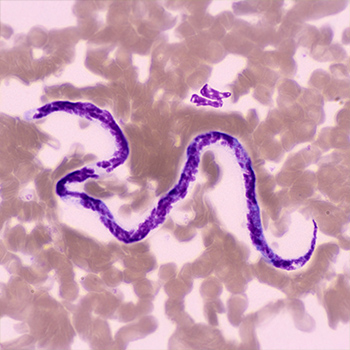
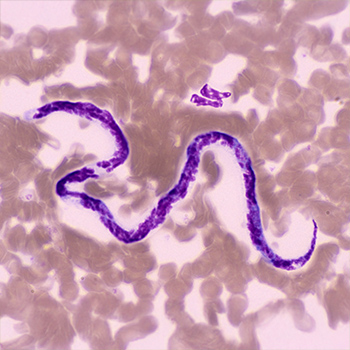
A peer-reviewed study in Parasites & Vectors evaluated six consecutive monthly doses of Simparica Trio® (sarolaner, moxidectin, & pyrantel chewable tablets) and NexGard® Plus against the macrocyclic lactone-resistant Dirofilaria immitis ZoeLA isolate in a controlled laboratory study.1 The findings add to the evidence that, when resistance is a concern, veterinary teams should consider the active ingredients, labeled dosage, treatment regimen, and evidence available for specific resistant isolates.
In this study, one adult heartworm was recovered from each of 2 of 8 dogs treated with Simparica Trio, compared with one adult heartworm found in 6 of 8 dogs treated with NexGard Plus. The geometric mean adult worm count was lower in the Simparica Trio group, 0.2 versus 0.7, and the difference was statistically significant (P = 0.0316). At study end, none of the Simparica Trio-treated dogs had detectable microfilariae, compared with 1 of 8 dogs in the NexGard Plus group.
There are several important considerations for veterinary health teams:
- Resistance is a clinical consideration. The publication notes that documented heartworm drug resistance is currently concentrated in the United States, particularly the Lower Mississippi River Valley and other areas of the eastern United States. Local epidemiology, exposure risk, and the evidence available for specific isolates should inform the conversation.
- Dose matters, but the comparison should be interpreted carefully. Both products contain moxidectin, but Simparica Trio delivers a minimum of 24 µg/kg per dose, twice the minimum of 12 µg/kg provided by NexGard Plus. The study was designed to investigate the impact of moxidectin dosage on efficacy, and the findings reinforce the importance of considering both the active ingredient and the labeled dosage when making prevention decisions.
- Consistent administration remains important. The study evaluated six consecutive monthly administrations, and all dogs were correctly and completely dosed on each treatment day. In practice, consistent administration according to the applicable product information and veterinary guidance remains an important part of prevention.
- Microfilariae matter beyond the individual patient. Microfilaremic dogs can serve as a source of infection for mosquitoes, which may then transmit heartworm to other dogs. Prevention therefore supports both individual and broader animal health.1
This study was conducted under controlled laboratory conditions and evaluated efficacy against one resistant isolate. It should not be interpreted as answering every clinical question or as replacing the product label, local guidance, diagnostic testing, or veterinary judgment. Rather, this study contributes to a growing body of evidence that can help inform veterinary team conversations with clients, particularly in areas where resistant heartworm isolates are documented or suspected.
Heartworm disease is easier, safer and more cost-effective to prevent than to treat. For veterinary teams, the opportunity is to make prevention understandable, evidence-based, and achievable for every patient and client.
I am grateful to the researchers and veterinary professionals who continue to strengthen the scientific foundation for heartworm disease prevention. I encourage colleagues to review the publication and consider how these findings may inform conversations in their own practices.
Read the publication:
Important Safety Information for Simparica Trio®
Use with caution in dogs with a history of seizures. Simparica Trio contains sarolaner, a member of the isoxazoline class, which has been associated with neurologic adverse reactions including tremors, ataxia, and seizures in dogs with or without a history of neurologic disorders. The safe use of Simparica Trio has not been evaluated in breeding, pregnant, or lactating dogs. The most frequently reported adverse reactions in clinical trials were vomiting and diarrhea. See full Prescribing Information at SimparicaTrioPI.com.
Sources
1 Rodriguez et al. (2026). Comparative efficacy of six monthly doses of Simparica Trio® (sarolaner, moxidectin, and pyrantel chewable tablets) versus NexGard® Plus (afoxolaner, moxidectin, and pyrantel chewable tablets) against a macrocyclic lactone-resistant Dirofilaria immitis isolate in dogs. Parasit Vectors, 19:259. https://doi.org/10.1186/s13071-026-07402-4. This study was funded by Zoetis. The NexGard® Plus and Simparica Trio® comparison is based on geometric mean adult worm counts at necropsy on day 237 following experimental inoculation with ML-resistant D. immitis ZoeLA infective (L3) stage and six consecutive monthly oral treatments at the recommended label dose.
2 Nelson CT, McCall JW, Moorhead A, Starkey L, Ames M. American Heartworm Society Canine Guidelines for the Prevention, Diagnosis, and Management of Heartworm Infection in Dogs. American Heartworm Society; 2024.
NexGard and NexGard Plus are registered trademarks of Boehringer Ingelheim Animal Health USA Inc. Simparica Trio is a registered trademark of Zoetis Services LLC.