Advancing diagnostic technology for a deeper look into pet health
AI-powered diagnostic tools, a virtual laboratory and expert clinical support can help veterinarians make faster, better-informed decisions about pet health and aim to alleviate workflow challenges.
This audio recording was enabled by AI
Key Points
- Advanced diagnostic technology has the power to transform veterinary practice, offering fast, accurate insights into pet health.
- AI-powered tools like Vetscan Imagyst® and Virtual Laboratory consultations help veterinary teams save time, reduce stress, and improve patient outcomes.
- Real-time access to expert support empowers veterinary healthcare teams to make better-informed decisions and deliver more comprehensive care for their patients.
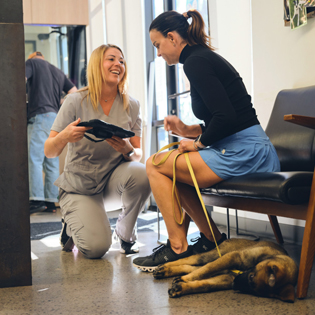
Veterinarians listen intently to pet owners anxiously trying to describe what’s causing their pet discomfort, but sometimes it’s hard to decipher the problem. They may hear, “my dog isn’t himself this week, he’s cranky, sluggish, not eating,” or “he doesn’t want to engage in any of his favorite activities.”
Veterinarians and their teams set out to find the cause of what’s making the pet feel “off” by taking blood, fecal and urine samples, and sending them out for analysis. Then the wait begins.
The importance of rapid veterinary diagnostics
Getting an accurate picture of a pet’s health has traditionally been a time-consuming effort. Most veterinarians do not have an expert clinical pathologist or parasitologist on staff, so a pet’s samples must be properly collected, stored and sent to specialists at reference labs. Sometimes, samples can be analyzed by the technicians in the practice, taking them away from their primary role of taking care of the patients and pet owners. An estimated 90 million fecal tests1 alone are performed each year in the U.S.
The information gathered through diagnostics is critical to prevent and treat disease and to have the most positive outcome for pets. Any delay in access to that information can mean a delay in treatment and the management of an animal’s health.
To provide accurate, trustworthy diagnostic results in hours instead of days or weeks, the Zoetis Diagnostic team has partnered with leading artificial intelligence (AI) experts and built global teams of specialists to introduce innovative diagnostic services that support veterinarians around the world. Among these game-changing tools are an AI-powered analyzer and a global consultation service, or a virtual laboratory, that gives veterinarians access to clinical specialists around the globe from 14+ clinical specialties – whenever it’s most convenient for the veterinary practice.
“We know the daily struggles veterinarians face: staff shortages, more pets that need care and increasing demands from pet owners for faster results. All of that leads to incredible stress,” says Dr. Richard Goldstein, a veterinarian, Head of Medical Affairs and Global Chief Medical Officer at Zoetis. “We aim to help take the pressure off by giving veterinary practices more efficient ways to find out exactly what’s going on with a pet’s health – and by giving them real-time access to clinical specialists who can consult with them on even the scariest cases.”
How AI-powered technology supports veterinary teams
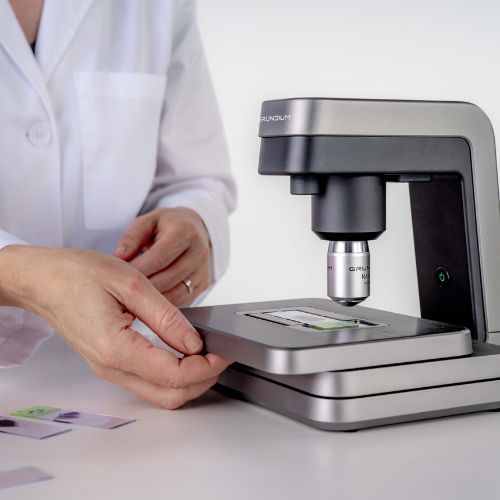
In 2020, Zoetis launched Vetscan Imagyst, a first-of-its-kind technology that allows a veterinarian or technician to test a myriad of samples right in the clinic using one platform. Within minutes, a comprehensive report is in the veterinarian’s hands.
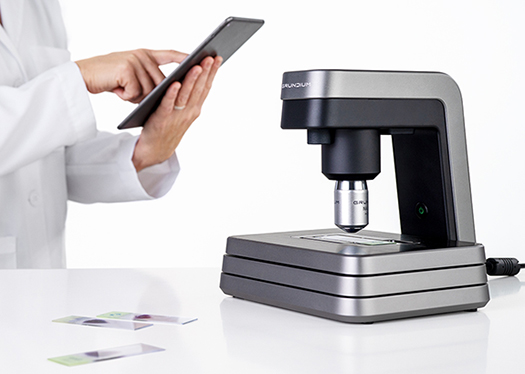
At first, veterinary teams could just test for parasites by placing a pet’s fecal sample on a slide, loading it into a scanner where a series of images were uploaded to the cloud and AI algorithms analyzed them based on Zoetis’ global fecal database. Experts have since expanded applications for Vetscan Imagyst, and today, it uses AI, not just for fecal analysis, but also to analyze blood, urine, dermatologic skin concerns, common lymph node and skin/subcutaneous masses, and cytology specimens. To continue to equip veterinary practices with ever-better diagnostic tools, additional applications for Vetscan Imagyst are being continuously explored.
Having to wait a week to find out if a pet has a serious diagnosis or disease can cause a lot of anxiety and stress for pet owners and veterinarians. With digital cytology and AI-powered diagnostics, the veterinarian can talk to a person on the first visit, rather than have that anxiety build up for days. Even if the news is difficult, real-time results can help the pet owner and veterinarian make the best decisions about the animal’s care.
AI is one of the most recognized advancements in technology today, but “we realize people have mixed feelings about it,”2 says Dr. Goldstein. “Vetscan Imagyst is a very high-level AI known as deep machine learning. Every Vetscan Imagyst application has been validated by human experts – clinical pathologists, parasitology experts. All those validations are public and published. The technology is also backed up in real time by human experts. If there is a question about the AI results or you need to look deeper, you send the results off digitally to a human expert for review.”
Vetscan Imagyst is only one piece of the picture. The ZoetisDx digital platform brings together technology and a Virtual Laboratory of medical experts who provide veterinary practices with a reliable, central hub to get the information they need – and fast. If a veterinarian has questions about a Vetscan Imagyst test result or wants to dig deeper on a topic, the practitioner can connect with a global expert and set up a convenient time for a consultation based on the veterinarian’s schedule.
“We’ve gone beyond creating fast, accurate diagnostics,” says Dr. Goldstein. “We’ve added extra layers of support by bringing specialist-level expertise into the practice in real time. It’s the modern way to manage patient care.”
Benefits for veterinary workflow and patient outcomes
Veterinarians need solutions that are elegant and allow them to get the job done with less effort. Diagnostic innovations that emphasize wellness and proactive medicine are also key to moving the needle on pet health. Zoetis aims to research and develop the newest technology so veterinarians and their staffs can focus more on patient care.
The demand for care continues to grow. According to research from HealthforAnimals, pet ownership is rising globally in places like China, Brazil and Europe, particularly in millennial (ages 20s to late 30s) households, and it is estimated that more than half of the global population has a pet at home.3
More pets drive the need for more veterinary care in an already-stretched profession. "At Zoetis, we’re interested in providing a service for the veterinary practice so they will be able to practice medicine better, feel better about their jobs, and make the pet owner and the pet feel better,” says Dr. Goldstein.
Updated on July 10, 2026
All trademarks are the property of Zoetis Services LLC or a related company or a licensor unless otherwise noted. © 2025 Zoetis Services LLC. All rights reserved. VTS-01150
References
1 WIRED Brand Lab | Cloud to Clinic: Zoetis' Vision for Veterinary Practices | WIRED
2 Ethical concerns mount as AI takes bigger decision-making role – Harvard Gazette
3 Global Trends in the Pet Population - HealthforAnimals