
Research & Development
Through our unmatched expertise, capabilities and scale, we are expanding into new areas of care, advancing next-generation therapies and defining the next decade of animal health.
With purpose-driven commitment to addressing animals’ unmet medical needs, our R&D programs are fueled by our scientists’ and veterinarians’ comprehensive understanding of disease biology, and grounded in validated targets and platforms. This approach enables us to innovate with a higher degree of scientific viability and likelihood of success.
Our innovation model is powered by an integrated science-to-scale model that connects unmatched scientific and veterinary expertise, scientific insight and intellectual property with manufacturing excellence and commercial execution to transform discoveries into product approvals and improved care for animals.
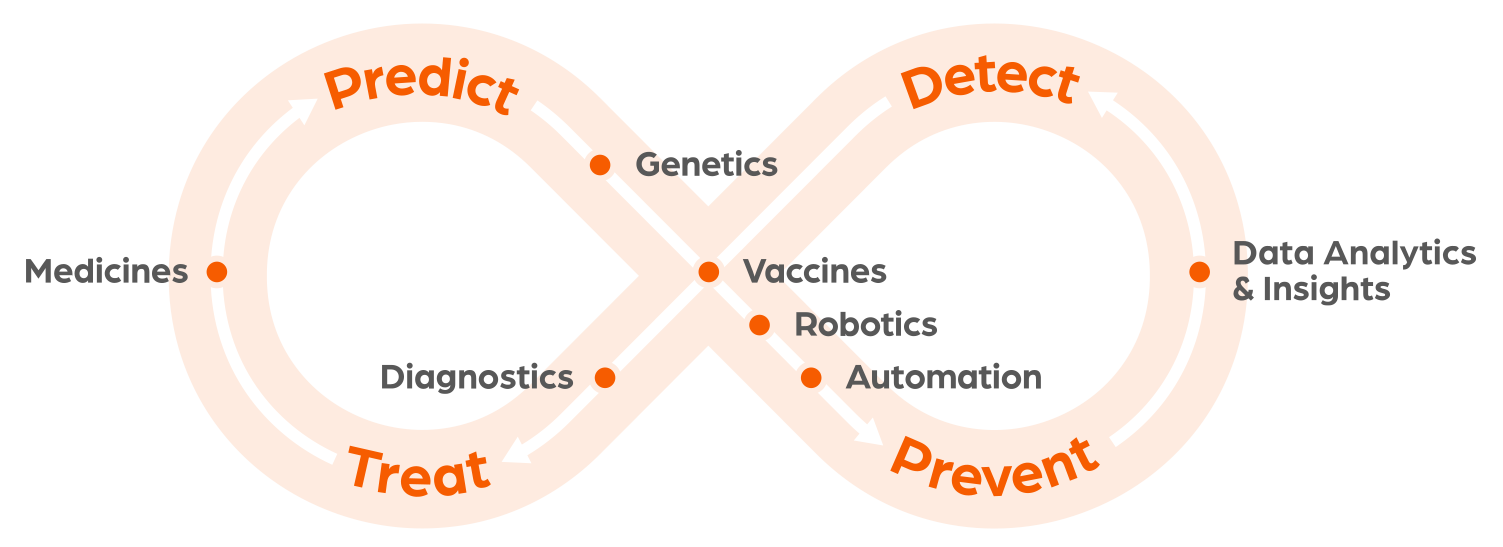
Continuum of Care
R&D by the numbers
~1,700
R&D colleagues
$6 billion
Invested in R&D since 2013
18
“Blockbuster” products*
2,000+
New products and lifecycle innovations introduced in last 13 years*
~300
Product lines across 8 species
90
Therapeutic targets
15
Therapeutic areas
*Facts and figures shown are as of December 31, 2025, as reported in our 2025 Annual Report on Form 10-K filed on February 12, 2026. Blockbuster products are those that earned $100 million or more in revenue in 2025.
Areas of focus
Driven by our scientists’ curiosity and expertise, our proven innovation model has yielded new standards of care for pets and meaningful solutions for livestock. Our pipeline is fueled and informed by our customers’ unmet medical needs as we continue to innovate in existing areas of veterinary medicine as well as expand into new categories of care. Our scientists are converting science into tangible solutions that aim to define the next decade of animal care.
Cardiology
 Cardiology is an underserved need in companion animals, and our R&D is focused on novel therapeutics meant to provide simpler dosing and better outcomes for dogs with mitral valve disease and cats with hypertrophic cardiomyopathy. By leveraging validated science and modalities as well as diagnostics, our scientists are targeting options to detect disease earlier and slow disease progression. The goal is solutions suitable for general practice rather than only specialty care.
Chronic Kidney Disease
 Innovative treatments could revolutionize how veterinarians care for patients with chronic kidney disease (CKD). By age 15, 80% of cats are expected to have kidney disease1. Meanwhile, CKD affects up to 10% of all elderly dogs2, and Zoetis’ scientists are advancing a comprehensive approach to raise the standard of care which currently is primarily palliative.
Our R&D pipeline includes monoclonal antibodies intended to address fibrosis of the kidney to slow disease progression, along with next-generation diagnostic tests using early biomarkers to detect decreased kidney function earlier.
1 Prevalence and classification of chronic kidney disease in cats randomly selected from four age groups and in cats recruited for degenerative joint disease studies | PubMed
2 Chronic Kidney Disease (CKD) in Dogs and Cats | The Animal Medical Center
Dermatology
 As the pioneer of canine dermatologic science, Zoetis has revolutionized the diagnosis, treatment and management of canine allergic dermatitis for millions of dogs over the past decade. Even with the most complete portfolio for tailored treatment of allergic dermatitis, our scientists continue to lead innovative developments, and our pipeline includes a longer-acting therapeutic for dogs as well as novel dermatology solutions for cats and horses.
Diagnostics
 Diagnostics are core to predicting and detecting disease, as well as informing prevention and treatment of parasites and infectious diseases. Our scientists are integrating artificial intelligence (AI), biomarkers and multimodal data to develop diagnostic solutions that enable earlier and more targeted interventions as well as diagnosis-driven treatments.
Livestock Vaccines
 Healthy livestock are central to a sustainable food system, and preventing disease is a cornerstone for animal health and well-being. From updating core vaccines to rapidly developing new vaccines to help protect against emerging infectious and/or transboundary diseases to developing new technologies, Zoetis is at the forefront of innovation empowering producers to improve herd health, productivity and sustainability.
Our scientists are working to expand multiple vaccine franchise expansions across cattle, poultry, swine, and aquaculture, reinforcing a prevention first strategy.
- Cattle: Expanding core bacterial and viral vaccines and developing innovative parasite control solutions.
- Poultry: Advancing our vector vaccine platform while pioneering next-generation preventative solutions to protect flocks against key bacterial diseases and coccidiosis.
- Swine: Driving new preventative categories and making vaccination easier, including needle-free options, to help swine producers prevent important diseases and elevate sustainability in their herds.
- Aquaculture: Building on our strong vaccine capabilities, we are developing DNA vaccines and other innovative solutions targeting critical unmet needs in fish health, helping farmers raise salmon and tilapia more sustainably.
OA Pain
 Building on our expertise in monoclonal antibodies, Zoetis has introduced new standards of care for controlling osteoarthritis (OA) pain in dogs and cats, designed to address chronic pain from OA differently than traditional pain medicine. Longer-acting therapies provide additional options for veterinarians to provide convenient treatment options for their clients.
Obesity & Anxiety
 Obesity in pets is prevalent, with roughly 59% of dogs and 61% of cats in the U.S. being affected1. Current management options include diet, exercise, and supplements, but compliance is low, creating a clear unmet need for safe, effective, and affordable therapeutic solutions. Our R&D efforts are focused on innovative treatments, such as new drug classes and mechanisms of action, intended to improve outcomes for pets and their owners.
Our scientists are also exploring therapeutics for pet anxiety, a highly prevalent condition that negatively impacts both animal well-being and the human-animal bond. Existing treatments have significant limitations, including slow onset, side effects, and the need for behavioral training, with no clear gold standard of care. Innovation in this area focuses on the goal of developing new, effective therapies with minimal sedation and standardized protocols, making anxiety management easier for both veterinarians and pet owners.
1 2022 State of U.S. Pet Obesity Report. Association for Pet Obesity Prevention.
Oncology
 As the leading cause of death for dogs in North America, cancer strikes approximately 1 in 4 dogs in their lifetime1 – and about half over the age of 102. Today, the primary oncology treatment for pets is surgery, usually delivered by general practitioners. Chemotherapy treatments are often the next step and largely administered by specialists.
Zoetis aims to develop a new class of oncology treatments with the goal of establishing new standards of cancer care that are safe, effective and accessible to general practitioners and the pets they serve.
Our scientists are exploring monoclonal antibodies (mAbs) intended to help the body’s own immune system fight/kill the cancer and mAbs that control metastasis, palliation therapies that aim to slow tumor growth and improve quality of life, and diagnostics for earlier insights to inform targeted treatments.
1 Pet Owner Resources | Veterinary Cancer Society
2 Cancer in Pets | American Veterinary Medical Association
Parasiticides
 Zoetis introduced the first all-in-one product for dogs that delivers combined protection from heartworm disease, ticks & fleas, roundworms & hookworms in one, simple-to-give, monthly chewable. This defined a new standard of care in 2020, and our scientists continue to innovate as we invest in next-generation, long-acting parasiticides to further improve pet-owner convenience and compliance.
Precision Animal Health
 Genomic insights help inform management and marketing decisions on farms and ranches. These insights also drive future innovation of the next generation of animal health solutions from Zoetis. Our scientists are focused on delivering predictive insights for our livestock customers that shape the health of food-producing animals, productivity and sustainability.
Center for Transboundary and Emerging Diseases
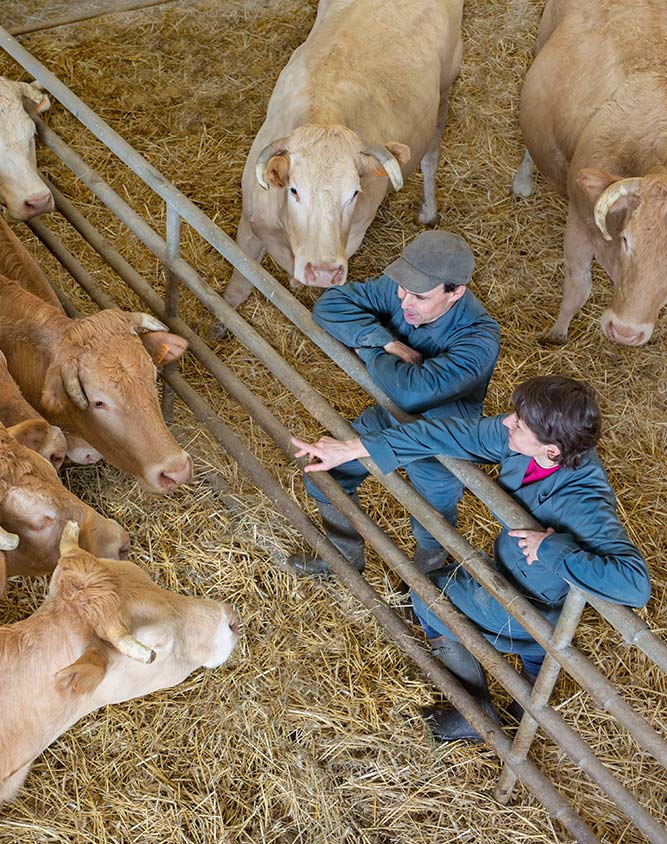
Infectious diseases can threaten the health of livestock, pets, wildlife and animals living in zoos. Worse yet, some of these diseases can be zoonotic, meaning they can transmit between animals and people. Zoetis supports a One Health approach as our scientists are involved with surveillance networks and rapid response teams that protect the health of animals and broader communities.
Our Center for Transboundary and Emerging Diseases mobilizes resources from across the company and works closely with leaders from government, health organizations, and the veterinary and livestock communities to combat infectious diseases. As the leading animal health company, we stand ready to develop solutions – including vaccines, diagnostic tests and other solutions – to meet the needs of our livestock producers, veterinarians, pet owners, governments and regulatory authorities.

Partnering with Zoetis
Creative approaches often mean seeking a different perspective, looking outside our own laboratory walls. We build unique partnerships that help strengthen our diverse portfolio and expand further into complementary spaces. To complement our strong and diverse R&D pipeline, we seek research collaborations that combine complementary talents, expertise and passion with the organizational capacity to deliver innovative products that can advance the care for animals.

Animal Care and Welfare
Animal-based research remains critical in the discovery, evaluation and regulatory processes for the development and production of animal health products. We are committed to ensuring that animal used in our research and medicine production are treated ethically and humanely.